Subterranean termite soil barrier defense protects residential architecture from subterranean colonizers, specifically the Western subterranean termite (Reticulitermes hesperus), which constructs subterranean earthen…
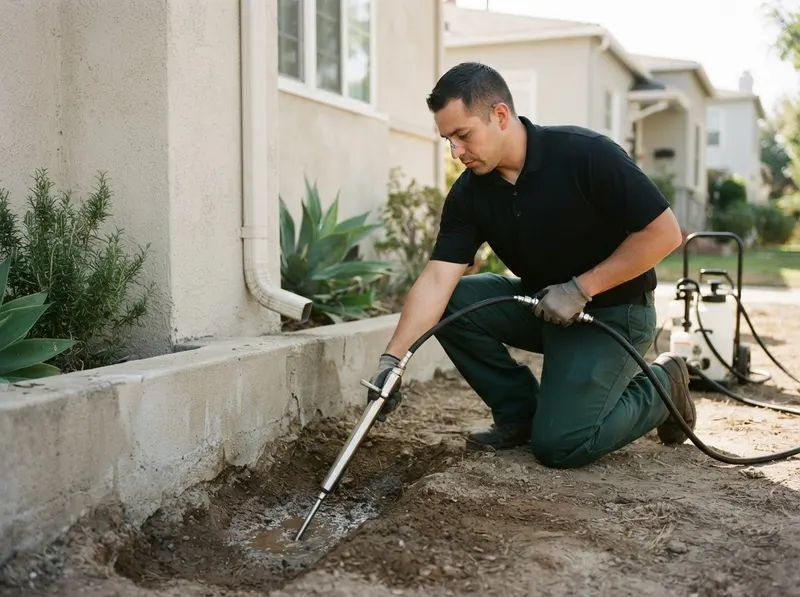
Subterranean termite soil barrier defense protects residential architecture from subterranean colonizers, specifically the Western subterranean termite (Reticulitermes hesperus), which constructs subterranean earthen mud shelter tubes to cross non-wood foundation walls. A continuous chemical soil zone creates an invisible disruption field; non-repellent active ingredients like fipronil transfer horizontally between foraging workers via contact and social grooming, eliminating the subterranean colony rather than merely scattering it. In historic hillside foundations found across Silver Lake, Echo Park, and Los Feliz, unreinforced concrete stem walls and terraced earth require precision trenching 6 inches wide by 6 inches deep to place protective liquid directly adjacent to load-bearing concrete. Conversely, mid-century concrete slab properties in Sherman Oaks and North Hollywood demand sub-slab vertical injection, drilling 0.5-inch ports spaced 12 inches apart through attached patios, tile walkways, and foundation perimeters, to prevent colony ingress under the slab.
Selecting a continuous soil barrier over localized bait stations involves evaluating building geometry and immediate structural risk. In high-moisture valley soil near the Sepulveda Basin Recreation Area or dense alluvial zones in Boyle Heights, subterranean termite pressure is continuous. A liquid barrier secures immediate subterranean exclusion without waiting months for subterranean worker recruits to stumble upon perimeter bait traps; the operational trade-off is the necessity of concrete drilling through exterior hardscapes rather than simple plastic cylinder ground stakes. For beachfront sandy soils in Venice or coastal humidity pockets in Pacific Palisades and Brentwood, liquid migration and subterranean depth require calibrated delivery rates, specifically 4 gallons per 10 linear feet per foot of depth, to ensure uniform structural saturation without washing chemical away from the foundation footings.
The deployment sequence follows three documented engineering steps:
1. Technicians dig continuous perimeter trenches 6 inches wide directly against exterior structural stem walls, removing loose organic mulch and ground cover.
2. Specialized injection rods apply registered non-repellent liquid termiticide into the trench while attached hardscape slabs are vertically rotary-drilled at 12-inch centers to inject subterranean voids below structural flatwork.
3. Technicians backfill the treated soil trench and seal all hardscape drill ports using hydraulic non-shrink structural concrete plugs matched to surrounding surface grades.
Every job gets a firm, written price after a free on-site visit.
Tell us about your subterranean termite soil barrier defense job in Los Angeles and we'll send a clear, written quote, usually the same day.
 Nexora Pest Defense